
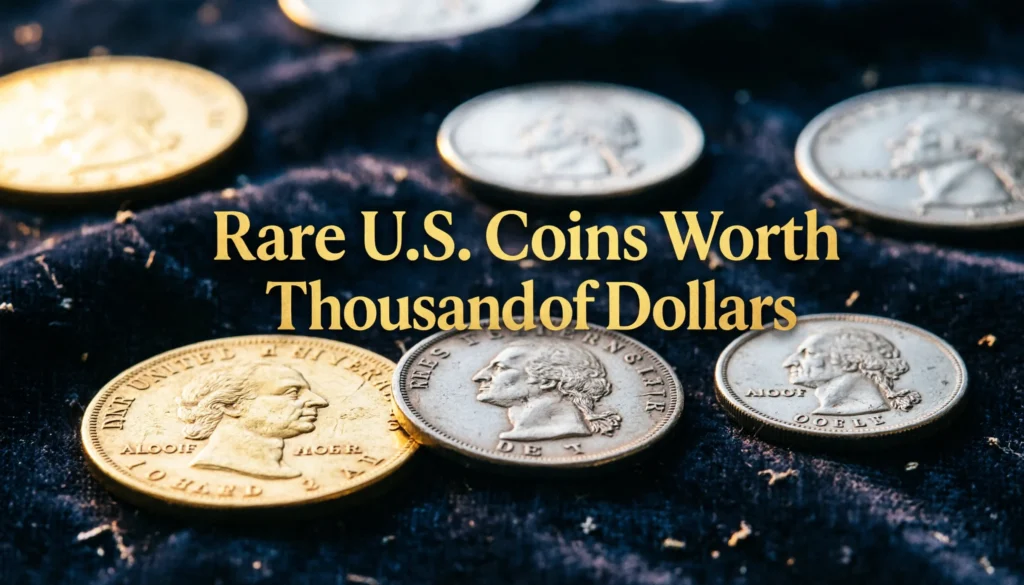
Somewhere in your attic, tucked inside a forgotten coffee can, or rattling around in an old dresser drawer, there might be a coin worth more than your car. It sounds unlikely, but it happens more often than you’d think. Rare U.S. coins have sold at auction for jaw-dropping sums — from a few thousand dollars to well over a million — and some of these valuable pieces look deceptively ordinary at first glance.
The world of numismatics, the study and collection of coins, has captivated people for centuries. But you don’t need to be a seasoned expert to discover a hidden gem. Whether you’re a beginner just starting to explore coin collecting, an investor looking for tangible assets, or a curious individual who inherited a jar of old coins, understanding which U.S. coins carry serious value can be both fascinating and financially rewarding.
In this guide, we’ll walk through some of the most valuable rare U.S. coins, explain what makes them worth thousands (or even millions), and share practical tips on identifying, grading, and protecting your finds.
What Makes a U.S. Coin Rare and Valuable?
Before diving into specific coins, it helps to understand the factors that drive a coin’s value. Not every old coin is worth a fortune, and not every valuable coin is particularly old. Several key elements determine whether a coin is worth face value or a small fortune.
Mintage Numbers
The fewer coins produced in a particular year and at a specific mint, the rarer that coin tends to be. Low-mintage coins are harder to find, which increases demand among collectors. For example, if the U.S. Mint produced only 10,000 of a certain coin versus 10 million, the scarcer version will almost always command a higher price.
Condition and Grade
A coin’s condition dramatically affects its value. Numismatists use a grading scale from 1 to 70, with 70 representing a flawless, uncirculated coin. A rare coin in “Good” condition might be worth a few hundred dollars, while the same coin graded “Mint State 65” or higher could fetch tens of thousands. Professional grading services like PCGS (Professional Coin Grading Service) and NGC (Numismatic Guaranty Company) authenticate and grade coins, providing buyers and sellers with a trusted standard.
Mint Errors
Mistakes during the minting process — doubled dies, off-center strikes, wrong planchets, and repunched mint marks — can transform an otherwise common coin into a collector’s prize. These errors are unintentional, which makes them rare and highly sought after.
Historical Significance
Coins tied to notable events, short-lived designs, or pivotal moments in American history often carry a premium. A coin’s story can be just as important as its metal content.
Demand Among Collectors
Ultimately, a coin is worth what someone is willing to pay for it. Popular series like Morgan Silver Dollars, Mercury Dimes, and Buffalo Nickels have passionate collector bases, which keeps prices strong even for more commonly available dates.
The Most Valuable Rare U.S. Coins
Let’s look at specific coins that have sold for thousands — and in some cases, millions — of dollars. Some of these might surprise you.
1. 1913 Liberty Head Nickel
Only five examples of this coin are known to exist, and none were officially authorized by the U.S. Mint. Their mysterious origin has fueled intrigue for over a century. One specimen sold at auction in 2018 for $4.56 million. Even in lower grades, a 1913 Liberty Head Nickel would be worth well over $3 million today.
2. 1804 Draped Bust Silver Dollar
Known as the “King of American Coins,” the 1804 Silver Dollar is one of the most famous rarities in numismatics. Despite the date, these coins were actually struck in the 1830s as diplomatic gifts. Only 15 are known to exist, and they regularly sell for between $2 million and $7.68 million, depending on the class and condition.
3. 1933 Saint-Gaudens Double Eagle
The 1933 Double Eagle has a dramatic history. Although 445,500 were minted, nearly all were melted down when the U.S. abandoned the gold standard. Only one is legally owned by a private individual, and it sold in 2021 for a record-breaking $18.9 million, making it the most expensive coin ever sold at auction.
4. 1894-S Barber Dime
Only 24 of these dimes were struck at the San Francisco Mint, and just nine are known to survive. The reason for such a tiny mintage remains debated among numismatists. One sold in 2016 for nearly $2 million. Even in heavily worn condition, an 1894-S Barber Dime would be worth at least $500,000.
5. 1943 Copper Lincoln Penny
During World War II, copper was reserved for ammunition, so the Mint produced pennies from zinc-coated steel. However, a small number of copper planchets accidentally made it into production. Approximately 20 to 40 copper 1943 pennies are believed to exist, and they’ve sold for over $200,000. One specimen in exceptional condition brought $1.7 million in 2010.
6. 1955 Doubled Die Lincoln Penny
This is one of the most dramatic and recognizable mint errors in U.S. coinage. The obverse lettering and date appear noticeably doubled, visible even to the naked eye. Approximately 20,000 to 24,000 were released into circulation. In uncirculated condition, a 1955 Doubled Die penny can sell for $25,000 to $50,000 or more.
7. 1916-D Mercury Dime
The Mercury Dime is one of the most beloved coin designs in American history, and the 1916-D is its key date. With a mintage of only 264,000 at the Denver Mint, this coin is scarce in any condition. In circulated grades, expect to pay $1,000 to $10,000. In mint state, values can exceed $50,000.
8. 1893-S Morgan Silver Dollar
Morgan Dollars are one of the most widely collected coin series in the world. The 1893-S, with a mintage of just 100,000, is the key date of the entire series. Even well-worn examples sell for $5,000 to $7,000. In uncirculated condition, this coin has fetched over $500,000.
9. 1909-S VDB Lincoln Penny
The 1909-S VDB is the first year of the Lincoln cent, featuring the designer’s initials (V.D.B.) on the reverse. Only 484,000 were minted before the initials were removed due to public criticism. This coin sells for $800 to $2,000 in average circulated grades and over $10,000 in uncirculated condition.
10. 1907 Ultra High Relief Saint-Gaudens Double Eagle
Designed by renowned sculptor Augustus Saint-Gaudens, this coin is considered the most beautiful ever produced by the U.S. Mint. The ultra high relief version proved impractical for circulation, and only about 20 were made. They sell for $1 million to $3 million when they appear at auction.
Quick Reference: Rare U.S. Coins and Their Approximate Values
| Coin | Year | Approximate Value Range | Why It’s Valuable |
| Liberty Head Nickel | 1913 | $3 million – $4.56 million | Only 5 known to exist |
| Draped Bust Silver Dollar | 1804 | $2 million – $7.68 million | Extreme rarity, historical prestige |
| Saint-Gaudens Double Eagle | 1933 | Up to $18.9 million | Nearly all melted; one legally private |
| Barber Dime | 1894-S | $500,000 – $2 million | Only 9 survivors from 24 minted |
| Copper Lincoln Penny | 1943 | $200,000 – $1.7 million | Wrong metal error during WWII |
| Doubled Die Lincoln Penny | 1955 | $25,000 – $50,000+ | Dramatic doubling mint error |
| Mercury Dime | 1916-D | $1,000 – $50,000+ | Low mintage key date |
| Morgan Silver Dollar | 1893-S | $5,000 – $500,000+ | Lowest mintage Morgan Dollar |
| Lincoln Penny (VDB) | 1909-S | $800 – $10,000+ | First year, designer initials, low mintage |
| Ultra High Relief Double Eagle | 1907 | $1 million – $3 million | Extremely limited striking, iconic design |
How to Identify Valuable Coins in Your Collection
You don’t need expensive equipment to start examining your coins. Here are practical steps anyone can take.
Check the Date and Mint Mark
The date is the first thing to examine. Cross-reference dates with known key dates for each coin series. Also look for the mint mark — a small letter indicating where the coin was made. Common mint marks include “D” for Denver, “S” for San Francisco, “O” for New Orleans, and “CC” for Carson City. Certain mint mark and date combinations are far more valuable than others.
Look for Errors
Examine your coins under good lighting and, if possible, with a magnifying glass or jeweler’s loupe (10x magnification is standard). Look for doubled lettering, off-center strikes, missing design elements, and unusual planchet characteristics. Error coins often hide in plain sight.
Assess the Condition
While professional grading requires expertise, you can make a rough assessment yourself. Does the coin show heavy wear, or does it look nearly new? Are all the design details sharp? Are there scratches, cleaning marks, or damage? Coins that have been cleaned, polished, or altered typically lose significant value.
Weigh and Measure the Coin
If you suspect you have something unusual — like a 1943 copper penny — weigh it. A genuine copper 1943 cent weighs about 3.1 grams, while the common steel version weighs about 2.7 grams. A simple kitchen scale accurate to 0.1 grams can help you screen potential finds.
Use Reliable Resources
Invest in a current edition of “A Guide Book of United States Coins” (the Red Book) by R.S. Yeoman and Kenneth Bressett. This annually updated reference provides retail values, mintage figures, and historical context for virtually every U.S. coin ever made. Online resources like PCGS CoinFacts and NGC’s coin explorer are also excellent free tools.
Tips for Buying and Investing in Rare Coins
If you’re looking to build a collection or invest in rare U.S. coins, approach the market with caution and knowledge.
Buy the Coin, Not the Holder
Always examine the coin itself, not just the label or slab. While PCGS and NGC holders provide assurance, understanding what you’re looking at prevents overpaying for coins that may be at the low end of their assigned grade.
Start with What You Enjoy
The most successful collectors are those who genuinely love what they collect. Choose a series that interests you — whether it’s Lincoln cents, Morgan Dollars, or gold coins — and learn everything about it. Knowledge is your greatest asset in numismatics.
Purchase from Reputable Dealers
Buy from established dealers who belong to organizations like the American Numismatic Association (ANA) or the Professional Numismatists Guild (PNG). These memberships require adherence to ethical standards. Avoid deals that seem too good to be true — counterfeit and altered coins are a persistent problem in the hobby.
Prioritize Quality Over Quantity
One high-grade, well-preserved coin will almost always outperform ten mediocre ones in long-term value. Collectors and investors alike tend to gravitate toward the finest examples available, which drives premiums for top-condition coins higher over time.
Store and Protect Your Coins Properly
Never clean your coins. Cleaning removes the natural patina (toning) that develops over time and can reduce a coin’s value by 50% or more. Store coins in non-PVC holders, coin albums, or professionally graded slabs. Keep them in a cool, dry environment away from direct sunlight and humidity.
The Future of Rare Coin Collecting
The rare coin market has shown remarkable resilience over decades. While values fluctuate with economic conditions, truly rare coins with strong collector demand have consistently appreciated over the long term. The rise of online auctions, digital marketplaces, and social media communities has brought new collectors into the hobby, expanding the market and increasing competition for the finest pieces.
Modern technology has also made authentication and grading more accessible. Third-party grading services have created standardization and trust in the market, making it safer for newcomers to participate with confidence.
For investors, rare coins offer portfolio diversification, tangible asset ownership, and the pleasure of holding a piece of American history. Unlike stocks or bonds, a rare coin is something you can physically hold, display, and enjoy — all while its value potentially grows.
Frequently Asked Questions About Rare U.S. Coins
1. How do I know if my old coins are worth anything?
Start by identifying the coin’s date, mint mark, and denomination. Cross-reference these details with a pricing guide like the Red Book or an online resource such as PCGS CoinFacts. Pay attention to key dates and known errors for each series. If you believe you have something valuable, take it to a reputable coin dealer or submit it to a professional grading service for evaluation. Avoid cleaning or altering the coin in any way before getting an expert opinion.
2. What is the most valuable U.S. coin ever sold?
The 1933 Saint-Gaudens Double Eagle holds the record, selling for $18.9 million at Sotheby’s in June 2021. This coin’s extraordinary value stems from its extreme rarity — it’s the only 1933 Double Eagle that can be legally owned by a private individual — combined with its stunning design and dramatic legal history.
3. Are modern U.S. coins ever worth more than face value?
Yes, certain modern coins can be quite valuable. Error coins from recent years, low-mintage commemorative issues, and coins with unusual varieties can sell for hundreds or even thousands of dollars. For example, some 2004 Wisconsin State Quarters with an extra leaf error have sold for $200 to $500. Keeping an eye on your pocket change can occasionally pay off.
4. Should I get my coins professionally graded?
Professional grading is worth the cost if you believe your coin has significant value — generally $100 or more. Grading fees typically range from $20 to $150 per coin depending on the service level. A graded coin in a sealed holder from PCGS or NGC is easier to sell, commands higher prices, and provides buyers with confidence in the coin’s authenticity and condition. For lower-value coins, the grading cost may not be justified.
5. Where is the best place to sell rare coins?
You have several options depending on the coin’s value. For high-value coins ($5,000 and above), major auction houses like Heritage Auctions, Stack’s Bowers, or Great Collections provide the widest exposure to serious collectors and typically achieve the strongest prices. For mid-range coins, reputable local dealers, online dealers, and platforms like eBay (with careful listing practices) are viable options. Always get multiple opinions on value before selling, and never accept the first offer without doing your homework.
Conclusion
Rare U.S. coins represent a unique intersection of history, art, and economics. From a humble 1943 copper penny worth over a million dollars to the majestic Saint-Gaudens Double Eagle that broke auction records, these small metal discs carry stories and values that far exceed their size.
Whether you’re just beginning to explore numismatics or you’re a seasoned collector adding to a decades-old collection, the thrill of discovering something rare never fades. The key is education — learn to recognize what you’re looking at, understand the factors that drive value, and approach every coin with curiosity and respect.
Take the time to examine those inherited coins, check your pocket change, and explore the series that capture your imagination. The next great numismatic discovery might be closer than you think — and it could be worth far more than you ever imagined.