
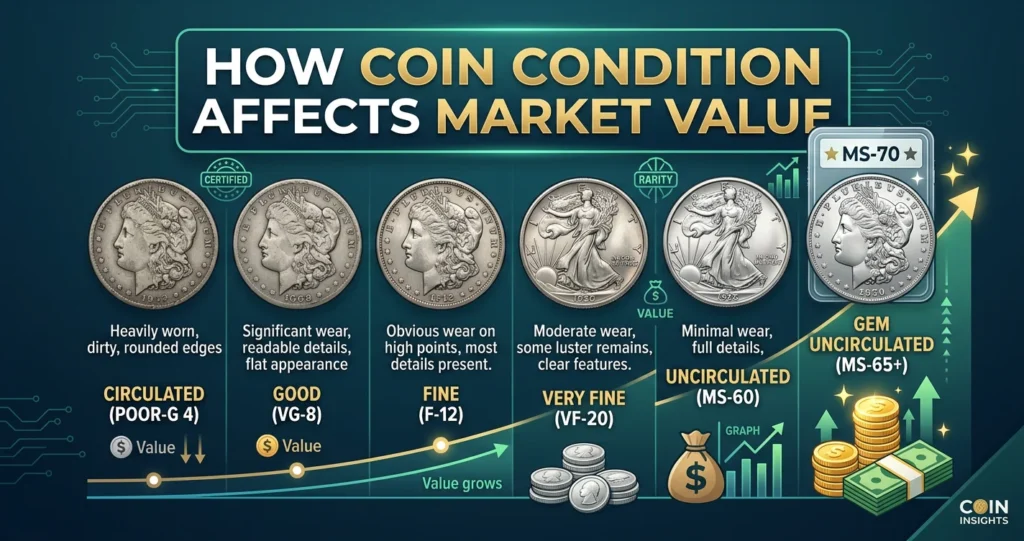
Two coins sit side by side on a dealer’s table. Both are 1881-S Morgan Silver Dollars — same year, same mint, same design. One is priced at $65. The other carries a tag reading $4,500. A newcomer stares at them in confusion, wondering what could possibly justify that difference.
The answer is condition. In the world of numismatics, the physical state of a coin isn’t just a detail — it’s often the single most important factor determining market value. A coin that has been carefully preserved since the day it left the mint can be worth fifty, a hundred, or even a thousand times more than an identical coin that spent decades rattling around in circulation.
Understanding this relationship between coin condition and value isn’t optional for serious collectors and investors. It’s foundational. Whether you’re evaluating a potential purchase, deciding whether to submit a coin for professional grading, or simply trying to understand why your inherited collection is worth what a dealer quoted, this guide will give you the clarity you need.
Why Condition Matters So Much in Numismatics
Coins are manufactured objects, but they’re also finite historical artifacts. Unlike stocks or bonds, no new supply of an 1881-S Morgan Dollar can be created. The number of surviving examples in high grades is fixed — and that number is often remarkably small.
Consider that a coin minted in 1881 has had over 140 years of opportunities to be worn, damaged, cleaned, lost, or melted. The ones that survived in pristine condition did so through a combination of careful handling, fortunate circumstances, and sometimes simple luck. Those survivors are genuinely rare, and rarity drives value.
Beyond simple rarity, condition signals quality. Collectors are drawn to beautiful objects, and a coin in superb condition is a miniature work of art — sharp details, glowing luster, original surfaces that haven’t been disturbed since the coin was struck. The aesthetic appeal of a high-grade coin is real and powerful, and buyers pay accordingly.
The Grading Scale: How Condition Is Measured
The numismatic industry uses the Sheldon Scale, a 1-to-70 numerical system, to standardize coin condition assessments. This scale, developed by Dr. William Sheldon in 1949, assigns every coin a number that corresponds to a specific level of preservation. Understanding where a coin falls on this scale is essential to understanding its market value.
Poor to Good (Grades 1–6)
At the bottom of the scale, coins are heavily worn to the point where design elements are barely visible. A coin graded Poor-1 (PO-1) shows just enough detail to identify its type and possibly its date. About Good-3 (AG-3) coins have an identifiable design but almost no fine detail remaining. Good-4 to Good-6 (G-4 to G-6) coins show clear outlines and readable lettering but flat, featureless surfaces where all the fine detail has been worn away.
These coins typically sell for the lowest prices in any series — often only marginally above their silver or gold melt value, if they contain precious metal at all. For most common-date coins, a G-4 grade means minimal collector premium. However, for extremely rare coins, even heavily worn examples command significant money simply because so few survive in any condition.
Very Good to Fine (Grades 8–15)
Coins in the Very Good (VG-8 to VG-10) range show clear design elements with some detail beginning to emerge in protected areas of the design. Fine (F-12 to F-15) coins display moderate wear across high points but retain approximately half of their original fine detail. Hair strands on a Liberty portrait, for instance, might be partially visible but not individually distinct.
These grades represent well-worn but genuinely collectible coins. For most series, Fine-grade examples represent the entry point for meaningful collector interest beyond raw metal value.
Very Fine to Extremely Fine (Grades 20–45)
This range is where coins begin showing significant premiums over their lower-grade counterparts. Very Fine (VF-20 to VF-35) coins display light to moderate wear on the high points with most design details clear and sharp. Extremely Fine (EF-40 to EF-45) coins show only slight wear on the very highest design elements, with nearly full detail visible and traces of original luster often still present.
Many collectors building type sets or series collections target this grade range as offering strong visual appeal at reasonable prices. An EF-45 coin looks genuinely impressive — sharp, detailed, and attractive — without commanding the substantial premiums that uncirculated examples require.
About Uncirculated (Grades 50–58)
About Uncirculated coins (AU-50 through AU-58) represent coins that technically entered circulation but spent very little time there. They show trace wear on only the very highest design points — the tips of hair curls, the highest feathers on an eagle, the peak of a cheek. Significant original luster remains, sometimes covering 80% to 95% of the coin’s surface.
AU coins can be tricky. A coin graded AU-58 might look nearly identical to an MS-60 to an untrained eye, yet the price difference can be substantial. Professional graders distinguish between these grades by examining the precise nature of the surface disturbance — wear produces a different appearance under proper lighting than bag marks or other contact marks that characterize lower mint state grades.
Mint State (Grades 60–70)
Mint State coins show absolutely no wear whatsoever. They were produced by the mint and preserved without ever entering circulation. However, “uncirculated” doesn’t mean “perfect.” Even coins that never touched a pocket or cash register can acquire marks, reduced luster, or eye appeal issues from the production process itself — coins tumbling against each other in mint bags, imperfect die preparation, or handling during quality control.
The MS scale from 60 to 70 evaluates the quality of an uncirculated coin’s surfaces, luster, strike, and eye appeal:
- MS-60 to MS-62: Uncirculated but with abundant contact marks and possibly dull or impaired luster. These represent the lowest tier of mint state quality.
- MS-63: A select uncirculated coin with fewer marks and better overall appearance. Attractive to many collectors but not exceptional.
- MS-64: A choice uncirculated coin with minor imperfections that keep it from the gem category. Often represents excellent value — near-gem quality at a significant discount to MS-65.
- MS-65 (Gem): Strong luster, sharp strike, only minor imperfections not immediately obvious. Eye appeal is excellent. This grade represents a significant price threshold for most coins.
- MS-66 to MS-67 (Superb Gem): Exceptional quality with nearly imperceptible marks and outstanding visual appeal. These coins represent the finest examples most collectors will ever own for most series.
- MS-68 to MS-70: Near-perfection to absolute perfection. MS-70 coins show no imperfections whatsoever under 5x magnification. True MS-70 coins of classic U.S. types are extraordinarily rare — for older series, they may not exist at all.
Real-World Price Impact: Grade-by-Grade Comparisons
The numbers on the grading scale translate directly into dramatic market price differences. Looking at specific coins illustrates just how profound this impact can be.
| Coin | Grade | Approximate Market Value |
| 1881-S Morgan Silver Dollar | G-4 | $35–$45 |
| 1881-S Morgan Silver Dollar | VF-30 | $50–$65 |
| 1881-S Morgan Silver Dollar | MS-63 | $65–$90 |
| 1881-S Morgan Silver Dollar | MS-65 | $350–$500 |
| 1881-S Morgan Silver Dollar | MS-67 | $4,000–$8,000 |
| 1916-D Mercury Dime | G-4 | $1,000–$1,300 |
| 1916-D Mercury Dime | VF-30 | $4,500–$6,000 |
| 1916-D Mercury Dime | MS-63 | $25,000–$35,000 |
| 1916-D Mercury Dime | MS-65 | $75,000–$100,000+ |
| 1909-S VDB Lincoln Cent | G-4 | $700–$900 |
| 1909-S VDB Lincoln Cent | EF-40 | $2,000–$2,500 |
| 1909-S VDB Lincoln Cent | MS-64 Red | $12,000–$18,000 |
| 1909-S VDB Lincoln Cent | MS-66 Red | $50,000–$80,000+ |
These aren’t isolated examples. Across virtually every U.S. coin series, the pattern is consistent: condition creates enormous value disparities, and the premium accelerates dramatically at higher grade levels.
The Factors Within Condition That Drive Value
Raw grade numbers don’t tell the complete story. Professional graders and sophisticated collectors look at several specific elements when evaluating a coin’s condition and desirability.
Surface Preservation
The number, size, and location of marks on a coin’s surface are primary grade determinants. A small but prominent scratch across the face of a Liberty portrait is far more damaging to value than several small marks hidden in a busy background area. Location matters enormously — open fields (the flat, blank areas of a coin’s surface) are particularly unforgiving because marks there have nothing to hide behind.
Luster Quality
Original mint luster is created by microscopic flow lines left in the metal as it moves under extreme pressure during striking. This luster produces the distinctive “cartwheel” effect — a rolling, radiating brightness that shifts as the coin is tilted. Luster is destroyed by wear, cleaning, and environmental damage, and once lost, it cannot be genuinely restored. A coin with full, vibrant original luster is immediately recognizable as superior, even before close examination.
Strike Sharpness
How well the coin’s design was impressed onto the planchet during minting determines strike quality. Some coin types are notorious for weak strikes — Standing Liberty Quarters, Franklin Half Dollars, and Mercury Dimes frequently suffer from incomplete detail in specific areas of the design. A well-struck example of a typically weakly struck type commands a premium because it’s genuinely scarcer than high-grade examples with mushy or incomplete details.
For Mercury Dimes, the “Full Bands” (FB) designation — indicating sharp, separated horizontal bands on the reverse’s fasces — can multiply a coin’s value by two to five times over a non-FB example of the same grade. For Standing Liberty Quarters, “Full Head” (FH) certification creates similar premiums.
Eye Appeal
This is the most subjective element, but it’s genuine. Two coins can have identical technical grades and look completely different to the eye. Attractive, natural toning can enhance a coin’s visual appeal and even its grade. Blotchy, dark, or unattractive toning can suppress both the grade and the market price below what the technical surfaces might otherwise warrant.
Professional grading services acknowledge eye appeal through their grading decisions, and the market constantly reinforces it. Coins described as having exceptional eye appeal in auction catalog descriptions routinely sell for premiums of 20% to 50% over comparable coins without that distinction.
The Devastating Effect of Cleaning on Coin Value
No single factor destroys coin value more consistently and severely than cleaning. It’s estimated that the majority of early U.S. coins have been cleaned at some point — often by well-meaning owners who simply wanted their coins to look bright and shiny. The results are almost always catastrophic to value.
When a coin is cleaned — whether with metal polish, household cleaners, abrasive cloths, or even “dipping” in chemical solutions — the delicate luster flow lines are disrupted or destroyed. The resulting surface looks unnaturally bright under certain lighting and shows a characteristic “dead” appearance without the genuine cartwheel luster of an original coin.
Professional grading services assign cleaned coins a “Details” designation rather than a straight numerical grade. A coin labeled “MS Details, Cleaned” or “EF Details, Cleaned” will sell at a significant discount — typically 30% to 70% below the value of a problem-free example at the equivalent grade level.
The lesson is simple and absolute: never clean your coins. No matter how tarnished or dull they appear, cleaning will almost certainly reduce their value. Natural toning, even dark toning, is preferable to cleaned surfaces in the eyes of collectors and professional graders.
Other Condition Problems That Reduce Value
Cleaning isn’t the only issue that can compromise a coin’s value. Professional graders look for a range of problems that, when present, result in “Details” grades or reduced market prices.
- Environmental damage: Coins stored in humid environments can develop corrosion, pitting, or verdigris (a green copper corrosion product). These problems are often irreversible and can be severely damaging to value.
- Scratches and gouges: Deep cuts from sharp objects create permanent damage that no amount of time will erase. Even a single prominent scratch can relegate a coin from the premium market to the problem coin category.
- Rim damage: Nicks and dings on a coin’s edge are common — coins get dropped, stored carelessly, or struck against hard surfaces. Rim damage is particularly visible and always reduces value.
- Holes and mounting evidence: Coins drilled or otherwise mounted for jewelry use carry a permanent stigma in the numismatic market, typically reducing value by 50% or more regardless of the coin’s rarity.
- Tooling: Some dishonest individuals attempt to improve a coin’s appearance by using tools to sharpen design details or remove marks. Professional graders are adept at spotting tooling, and coins with this problem receive “Details” designations that dramatically impair their value.
- Artificial toning: Chemically induced toning applied to make a coin appear naturally aged is another deceptive practice. While natural toning enhances value, artificial toning — when detected — results in impaired designations.
Practical Tips for Preserving Your Coins’ Condition
If you own coins of any potential value, proper handling and storage are essential. Small mistakes can cost real money.
- Always handle coins by their edges. Hold the coin between your thumb and forefinger at the rim, never touching the obverse or reverse faces. Even clean hands leave oils that can develop into permanent fingerprint etching over time.
- Work over a padded surface. Dropping a coin onto a hard surface can create rim damage or surface marks. A soft cloth, felt mat, or coin tray provides cushioning if a coin slips from your fingers.
- Use proper storage materials. Avoid PVC-based plastic holders, which can deposit a damaging green residue on coin surfaces over time. Use Mylar flips, hard acrylic capsules, or certified holders from PCGS or NGC.
- Control the storage environment. Cool, dry, stable conditions are ideal for long-term coin storage. Avoid areas with temperature swings, high humidity, or exposure to chemicals. A dehumidifier in a storage room can make a meaningful difference in a humid climate.
- Never use rubber bands or ordinary cardboard near valuable coins. Rubber contains sulfur compounds that react with silver, causing toning and potentially corrosive damage. Some cardboards also contain acids that can affect coin surfaces over time.
Should You Get Your Coins Professionally Graded?
Professional grading by PCGS or NGC adds credibility, liquidity, and often market value to a coin. But it’s not always the right choice, and the decision deserves careful thought.
Professional grading makes strong financial sense when the coin’s potential value significantly exceeds the grading fee — generally when you’re looking at coins worth $100 or more. It’s particularly valuable for key dates in high grades, coins you plan to sell, and any coin where authenticity might reasonably be questioned.
For common circulated coins worth $10 to $30 each, grading fees of $25 to $50 make no economic sense. These coins are better sold as-is or kept as circulated examples without the overhead of professional certification.
When submitting coins for grading, clean them of loose dust if necessary using a gentle air puff — never touching the surfaces with any cloth or implement — and store them in basic protective flips before shipping. Fill out submission forms accurately and choose the appropriate service level based on the coin’s estimated value and your timeline.
Frequently Asked Questions About Coin Condition and Value
1. Can a coin lose value just from being stored improperly?
Absolutely, and it happens more often than people realize. Storing coins in PVC flips causes chemical reactions that deposit a sticky green film on surfaces. Humid environments lead to corrosion and pitting on copper and bronze coins. Sulfur-containing materials trigger toning on silver coins that, depending on severity, can range from attractive (adding value) to destructive (reducing value significantly). Even something as simple as storing coins loose in a drawer where they rub against each other causes accumulating surface marks that reduce grade over time. Proper storage isn’t optional for coins with real market value — it’s essential protection for your investment.
2. Why do some heavily worn coins still sell for thousands of dollars?
Extreme rarity overrides condition as a value driver. If a coin exists in only a handful of known examples regardless of grade, collectors seeking to include it in their collection must accept whatever condition is available. The 1894-S Barber Dime, for instance, has only nine known survivors. Even a heavily circulated example is essentially the only affordable option for a collector pursuing this key date, which keeps prices in the hundreds of thousands of dollars regardless of wear. For ultra-rare coins, even a Poor-1 example can be a significant numismatic prize simply because it exists and can be owned.
3. What is the difference between a coin with a “Details” grade and a straight grade?
A straight grade — like MS-64 or VF-30 — indicates that the coin has no significant problems and its value can be assessed normally against published price guides and recent auction results. A Details grade — such as “AU Details, Cleaned” or “VF Details, Environmental Damage” — indicates the coin would have received that approximate grade if it were problem-free, but a specific issue prevents it from receiving a clean certification. Details-graded coins typically sell for 30% to 70% less than straight-graded coins at the equivalent level, with the discount depending on the severity of the problem and the coin’s rarity. For common coins, this discount is severe. For genuinely rare coins, the discount is less extreme because any example has value to dedicated collectors.
4. How can I tell if a coin has been cleaned?
Cleaning produces several telltale signs that experienced collectors learn to recognize. Hairlines — extremely fine parallel scratches caused by polishing cloths — are visible under raking light as a network of fine lines across the coin’s surfaces. Chemical dipping removes toning and produces an unnaturally bright, uniform appearance that lacks the genuine cartwheel luster of original surfaces. Under a loupe, cleaned surfaces appear flat and featureless where original luster would show microscopic flow lines. If a coin appears suspiciously bright and brilliant for its age, yet lacks the vibrant, rolling luster you’d expect from a genuinely uncirculated example, cleaning is the likely explanation. When in doubt, a professional grader’s assessment is the most reliable answer.
5. Does toning always reduce a coin’s value?
Not at all — and in many cases, the opposite is true. Natural toning that develops on silver coins over decades can be extraordinarily beautiful, displaying complex colors including blues, purples, golds, oranges, and reds that appear in patterns influenced by the coin’s storage environment. These attractively toned coins, sometimes called “rainbow toned” specimens, frequently sell at significant premiums over untoned examples of the same grade. Collectors actively seek them out and pay dearly for the finest examples. The key distinction is between natural toning — which develops gradually and shows characteristic color progressions — and artificial toning, which is chemically induced to simulate age. Professional graders are skilled at distinguishing between the two, and artificially toned coins receive impaired designations that suppress their value.
Conclusion
Coin condition isn’t a side note in numismatics — it’s the central chapter. The difference between a coin that sells for face value and one that commands thousands of dollars often has nothing to do with rarity and everything to do with how well it has been preserved across the years and decades since it left the mint.
Understanding the grading scale gives you a shared language with dealers, auction houses, and fellow collectors. Knowing what specific factors — surface marks, luster, strike, eye appeal — drive grade distinctions helps you evaluate coins with an educated eye. Recognizing the devastating impact of cleaning and other damage protects you from costly mistakes both in what you buy and in how you handle what you own.
Most importantly, understanding the relationship between condition and value gives you a competitive edge. You’ll recognize when a coin is priced fairly, when it’s overpriced for its grade, and occasionally when it’s underpriced because someone didn’t fully appreciate what they had. That knowledge, built through study and experience, is what separates informed collectors and investors from everyone else.
Treat your coins with the respect their condition deserves. Store them properly, handle them carefully, and never succumb to the temptation to clean them. The coins you protect today are the ones that will reward you most tomorrow.