
Whether you’ve inherited a collection from a relative, found an old coin in your pocket change, or you’re considering investing in numismatics, understanding what makes a coin valuable is essential. Not all old coins are worth a fortune, and not all shiny new coins are worthless. The value of a coin depends on multiple factors that work together to determine its market price.
In this comprehensive guide, we’ll explore the key elements that contribute to a coin’s worth, from rarity and condition to historical significance and market demand. By the end, you’ll have the knowledge to better evaluate coins and make informed decisions as a collector or investor.
The Fundamental Factors That Determine Coin Value
Coin valuation isn’t a mystery reserved for experts. Several well-established factors determine what collectors and investors are willing to pay. Understanding these elements will help you identify potentially valuable pieces in any collection.
Rarity: The Scarcity Principle
Rarity stands as one of the most significant factors in coin valuation. Simply put, the fewer examples of a particular coin that exist, the more valuable it typically becomes. Rarity can result from several circumstances.
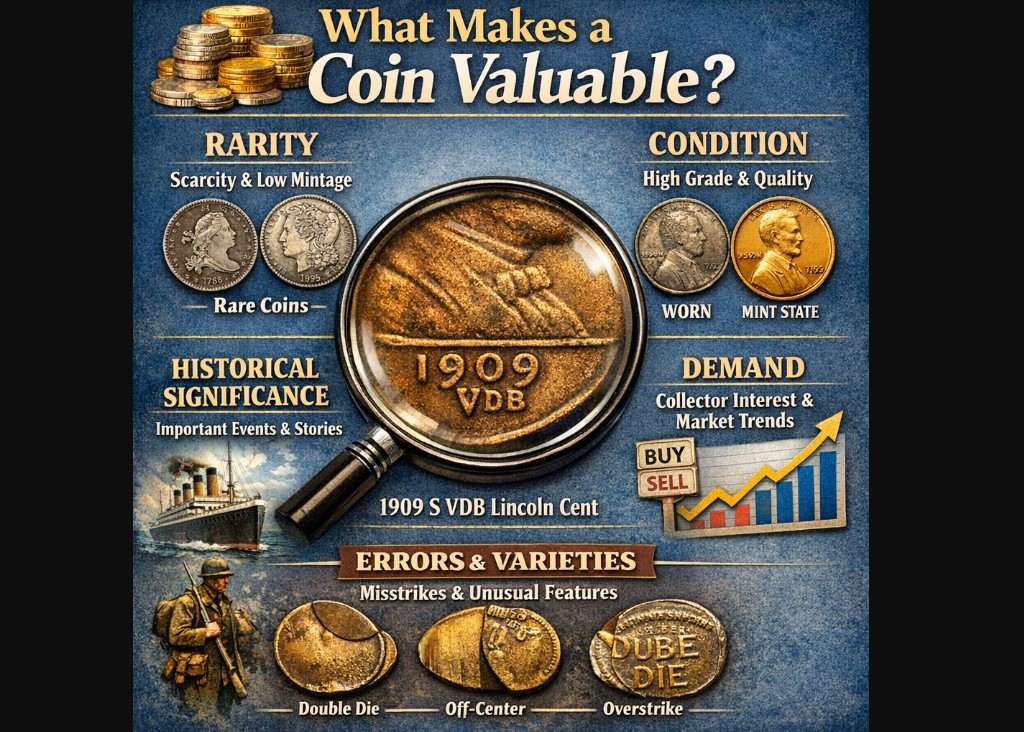
Low mintage numbers create natural scarcity. When a mint produces only a limited quantity of a specific coin, those pieces become harder to find over time. For example, the 1909-S VDB Lincoln cent had a mintage of just 484,000 coins, making it one of the most sought-after pennies in American numismatics.
Survival rates matter just as much as original production numbers. Many coins were melted down, lost, or damaged over the years. A coin might have started with a high mintage, but if few examples survived in collectible condition, those remaining specimens gain considerable value.
Error coins represent another category of rarity. Minting mistakes that slip through quality control become valuable precisely because they’re unusual. Double strikes, off-center strikes, and wrong planchet errors can transform ordinary coins into valuable collectibles.
Condition and Grade: Preservation Matters
The physical state of a coin dramatically affects its value. Two identical coins from the same year and mint can have vastly different values based solely on their condition.
Professional grading services like PCGS (Professional Coin Grading Service) and NGC (Numismatic Guaranty Corporation) use a standardized 70-point Sheldon Scale to evaluate coins. This scale ranges from Poor (P-1) to Perfect Mint State (MS-70).
Coins in mint state condition show no wear from circulation. These uncirculated pieces retain their original luster and all design details remain sharp. Even within mint state grades, small differences can create significant price variations. An MS-65 coin might be worth hundreds, while an MS-67 example of the same coin could command thousands.
Circulated coins receive grades from About Good (AG-3) to About Uncirculated (AU-58). The amount of wear, remaining detail, and overall eye appeal all factor into these assessments.
Professional grading provides authentication and an objective condition assessment. Slabbed coins in sealed holders offer buyers confidence and typically sell for premium prices compared to raw, ungraded examples.
Metal Content and Intrinsic Value
The precious metal content in a coin establishes a baseline value floor. Gold, silver, platinum, and palladium coins all carry intrinsic worth based on current metal market prices.
Pre-1965 American dimes, quarters, and half dollars contain 90% silver. Their melt value fluctuates with silver spot prices, ensuring they’re always worth more than face value regardless of condition or date.
Gold coins like American Eagles, Canadian Maple Leafs, and South African Krugerrands derive significant value from their gold content. Investors often purchase these as both collectibles and precious metal holdings.
Understanding the metal content helps you establish minimum values. A worn common-date silver dollar might not interest collectors, but its silver content still provides substantial worth.
Historical and Cultural Significance
Coins that played important roles in history or represent significant cultural moments often command premium prices beyond their rarity or condition.
Historical Context
Coins from pivotal moments in history attract dedicated collectors. Ancient Roman coins used during the time of Julius Caesar, medieval European coins from the Crusades, or American colonial currency all carry historical weight that enhances their appeal.
Commemorative coins issued for special events or anniversaries can become valuable, especially when they mark truly significant occasions. The 1892 Columbian half dollar commemorated the 400th anniversary of Columbus’s voyage and remains popular with collectors today.
Provenance and Pedigree
A coin’s ownership history can add substantial value. Pieces from famous collections or those with documented historical ownership often sell at premiums.
When a coin comes from a renowned collection, such as the Eliasberg Collection or the Norweb Collection, this pedigree enhances desirability. Collectors value the connection to numismatic history that these coins represent.
Market Demand and Collector Interest
Value ultimately comes down to what someone is willing to pay. Market demand drives prices up or down regardless of other factors.
Popular Series and Sets
Certain coin series maintain strong collector bases that support healthy market prices. Morgan silver dollars, Walking Liberty half dollars, and Buffalo nickels consistently attract buyers.
Completing sets motivates collectors to pursue specific dates and mint marks. The last coin needed to complete a collection often commands higher prices due to this focused demand.
Trends and Market Cycles
The numismatic market experiences trends just like any other market. Chinese coins gained popularity among Western collectors in recent years, driving up prices. Ancient coins have seen renewed interest from younger collectors seeking historical connections.
Economic conditions influence coin markets too. During economic uncertainty, precious metal coins often see increased demand as investors seek tangible assets.
Authentication and Certification
With valuable coins, authenticity becomes crucial. Counterfeit coins exist for nearly every valuable issue, making professional authentication important for serious collectors and investors.
Third-Party Grading Services
Reputable third-party grading services provide both authentication and condition assessment. PCGS and NGC are the most recognized in the industry, with their holders widely accepted and trusted.
These services employ expert graders who examine coins under magnification, verify authenticity, and assign grades. The coins are then sealed in tamper-evident holders with labels showing the grade and other relevant information.
While grading services charge fees, having valuable coins professionally certified often increases their market value by more than the cost of certification. Buyers pay premiums for the confidence these services provide.
Special Categories of Valuable Coins
Error Coins and Varieties
Minting errors create some of the most exciting finds in numismatics. These mistakes include doubled dies, where design elements appear twice due to die preparation errors, and off-center strikes, where the coin design doesn’t align properly with the blank planchet.
The 1955 Doubled Die Lincoln cent remains one of the most famous error coins, with strong doubling visible on the date and inscriptions. High-grade examples sell for thousands of dollars.
Wrong planchet errors occur when a coin is struck on a blank intended for a different denomination. A state quarter struck on a dime planchet would be a dramatic example worth significant money.
Pattern Coins and Trial Strikes
Pattern coins are experimental pieces struck by mints to test new designs or denominations. These coins were never intended for circulation, making them extremely rare.
Collectors prize patterns for their unique designs and historical importance in the development of coinage. They offer glimpses into designs that were considered but ultimately rejected.
Proof Coins and Special Finishes
Proof coins are specially made for collectors with extra care in production. They feature sharp strikes, mirrored fields, and frosted design elements. Modern mints produce proof sets annually, but older proof coins from limited production years command substantial premiums.
Practical Tips for Evaluating Coins
Whether you’re building a collection or considering selling coins you’ve inherited, these practical tips will help you make better decisions.
Research Before Buying or Selling
Knowledge is your best tool in numismatics. Before making significant purchases or sales, research comparable sales, consult price guides, and consider seeking expert opinions.
Online resources like auction archives show actual selling prices for coins similar to yours. Price guides provide baseline valuations, though remember that actual market prices may vary.
Proper Storage and Handling
Preserving a coin’s condition protects its value. Always handle coins by their edges, never touching the faces. Oils and acids from your skin can damage surfaces and reduce grades over time.
Store coins in appropriate holders designed for numismatic storage. Avoid PVC-containing plastics that can damage coin surfaces. Climate-controlled environments prevent environmental damage.
Building Relationships with Reputable Dealers
Establishing connections with honest, knowledgeable dealers provides advantages throughout your collecting journey. Reputable dealers offer fair prices, expert advice, and access to quality material.
Look for dealers who are members of professional organizations like the American Numismatic Association or the Professional Numismatists Guild. These memberships indicate commitment to ethical business practices.
Common Misconceptions About Coin Value
Several myths about coin values persist among beginners. Understanding these misconceptions helps you avoid disappointment and make realistic assessments.
Age Doesn’t Equal Value
Many people assume old coins are automatically valuable. While age can contribute to rarity, billions of ancient Roman coins exist that sell for just a few dollars because they’re so common.
Conversely, some modern coins have tremendous value due to low mintages or special characteristics. A 2000-P Sacagawea dollar with the Cheerios reverse pattern is worth thousands despite being relatively recent.
Cleaning Coins Destroys Value
Well-meaning individuals often clean coins thinking it will improve their value. This almost always decreases worth significantly. Cleaning removes the natural patina that forms over time and can create scratches or other damage.
Collectors and dealers can easily spot cleaned coins, and they avoid them because cleaning is considered damage. Never clean coins you hope to sell or collect.
Investment Potential of Coins
Coins can serve as alternative investments, but they require knowledge and realistic expectations.
Long-Term Perspective
Successful coin investing typically requires patience. Unlike stocks that you can easily liquidate, coins may take time to find the right buyer at the desired price.
Quality over quantity serves investors well. A few high-grade, desirable coins often appreciate better than many common pieces. Focus on coins with established collector bases and strong market demand.
Diversification Within Numismatics
Just as financial advisors recommend diversifying investment portfolios, coin investors benefit from variety. Holding different types of coins—ancient, modern, gold, silver—spreads risk across market segments.
Some collectors focus on one specific area and become experts in that niche. Specialization allows you to recognize opportunities and avoid overpriced items in your chosen field.
Where to Buy and Sell Valuable Coins
Understanding the marketplace helps you find fair prices whether you’re buying or selling.
Coin Shows and Conventions
Regional and national coin shows bring together dealers and collectors, offering opportunities to see many coins in person, compare prices, and build relationships.
Major shows like the ANA World’s Fair of Money attract top dealers and present rare opportunities to view museum-quality numismatic treasures.
Online Marketplaces
Online platforms have transformed coin collecting. Auction sites, dealer websites, and specialized numismatic marketplaces provide access to coins from around the world.
When buying online, stick with established platforms and sellers with strong reputations. Request clear images and don’t hesitate to ask questions about a coin’s condition or authenticity.
Local Coin Shops
Local dealers offer the advantage of face-to-face transactions and the ability to examine coins before purchasing. Building a relationship with a local shop provides a convenient place to buy, sell, and learn.
FAQs
How do I find out what my coins are worth?
Start by identifying your coins accurately, including the date, mint mark, and denomination. Consult current price guides like the Red Book (A Guide Book of United States Coins) for baseline values. For potentially valuable coins, consider professional appraisal or grading services. Compare your coins to recent auction results for similar pieces to understand current market values.
Are coin grading services worth the cost?
For valuable coins, professional grading is typically worth the investment. Certification provides authentication, protects the coin in a sealed holder, and often increases marketability. However, for common coins worth less than $100, grading fees may exceed the value increase. Focus certification efforts on coins where the service adds clear value.
What makes a coin rare?
Rarity stems from low original mintage numbers, low survival rates, or both. A coin might be rare because the mint produced few examples, or because most specimens were lost, melted, or destroyed over time. Condition rarity also exists—a common coin in exceptional preservation can be rare in that specific grade even if many lower-grade examples exist.
Should I clean my old coins before selling them?
Never clean coins you intend to sell or collect. Cleaning removes the natural patina and surface that collectors value, and it almost always decreases worth rather than increasing it. Even gentle cleaning methods can create microscopic scratches visible under magnification. Dealers and serious collectors avoid cleaned coins, and professional graders note cleaning on certification labels, which reduces value.
Can modern coins become valuable?
Yes, modern coins can gain significant value through low mintages, errors, or special varieties. Modern commemoratives, proof sets, and error coins from recent years can be worth multiples of their issue price. The key factors remain the same: rarity, condition, and collector demand. Some modern coins appreciate quickly when collectors recognize their scarcity or unique characteristics.
Conclusion
Understanding what makes a coin valuable empowers you as a collector, investor, or someone simply curious about coins you’ve encountered. Value stems from the interplay of rarity, condition, historical significance, precious metal content, and market demand. No single factor determines worth in isolation—these elements work together to establish a coin’s place in the market.
Whether you’re drawn to ancient coins with millennia of history, classic American silver dollars, or modern commemoratives, knowledge remains your most valuable tool. Take time to research, handle coins properly, seek expert guidance when needed, and build relationships within the numismatic community.
The world of coin collecting offers endless opportunities for discovery, learning, and potentially profitable investments. Some collectors find satisfaction in completing sets, others seek historical connections, and many simply enjoy the beauty and craftsmanship of well-designed coinage. Whatever your motivation, understanding value helps you make informed decisions and get the most from your numismatic pursuits.
Remember that the coin market, like any market, experiences fluctuations. Trends change, new discoveries emerge, and what’s popular today may shift tomorrow. Stay informed, continue learning, and approach coin collecting with both passion and practical knowledge. The coins you acquire today might become treasured heirlooms for future generations, carrying both monetary and sentimental value far into the future.